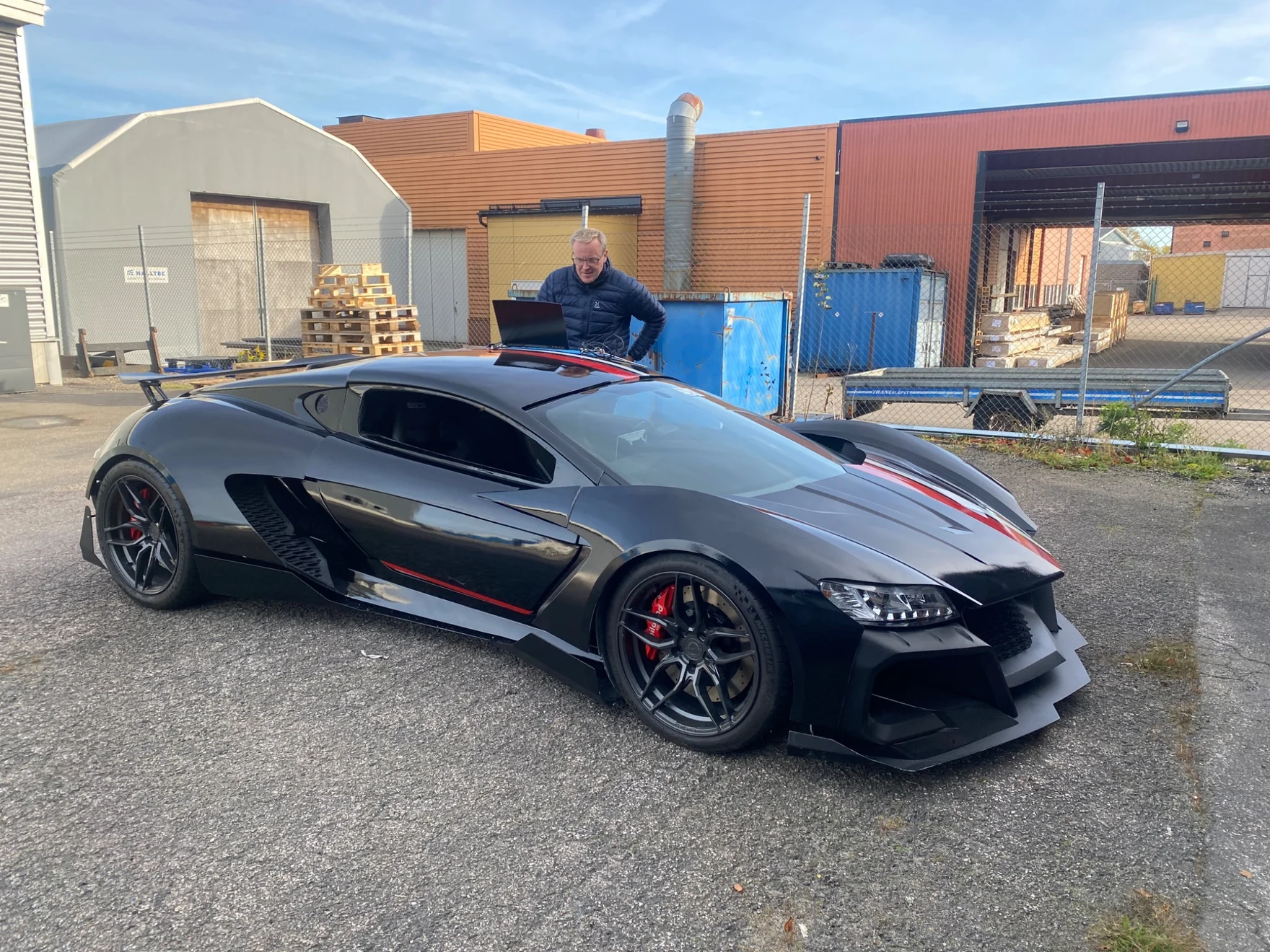
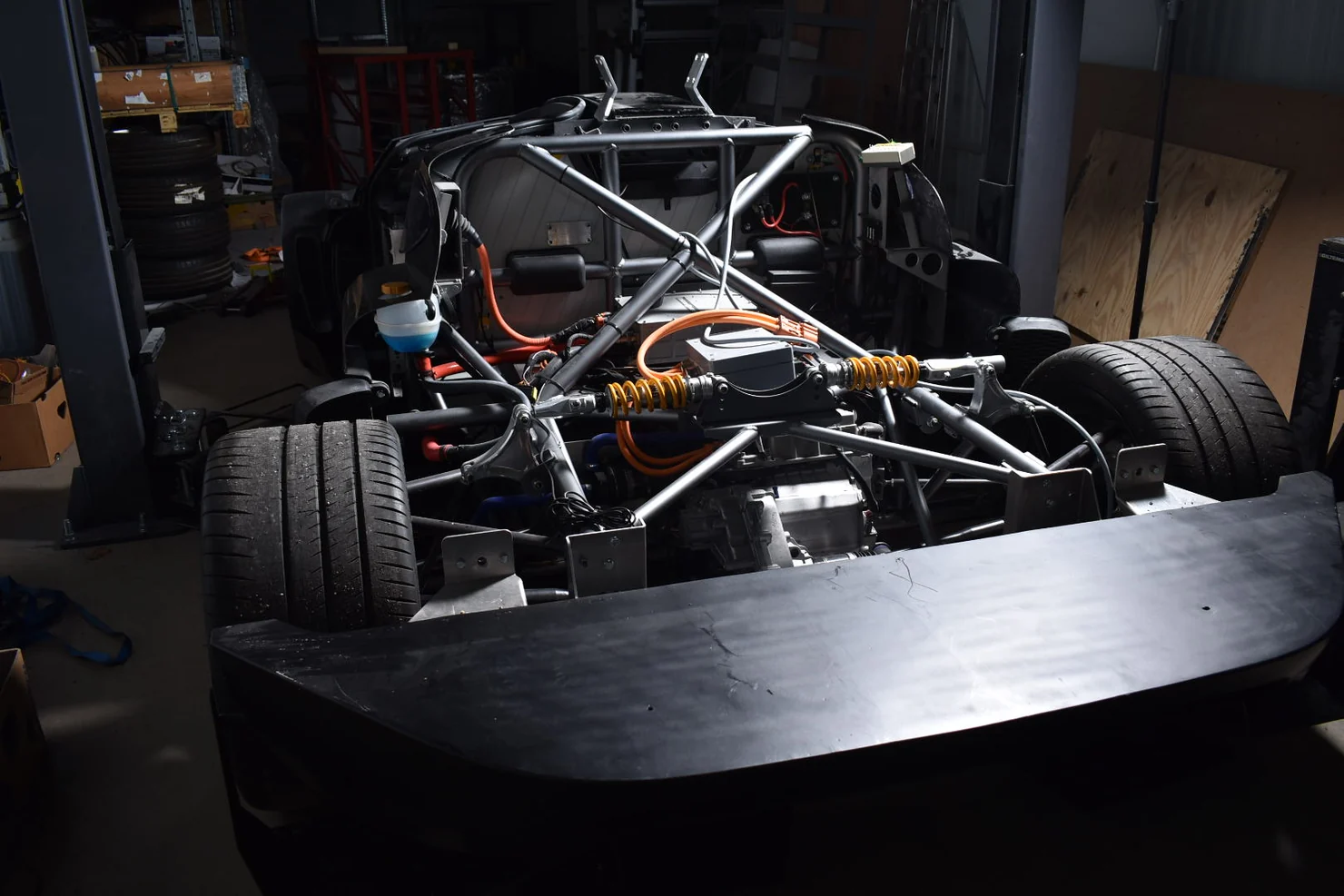
There's a photograph of the car before it was much of a car. A bare tubular frame stands on little workshop castors, a driver's seat fitted in the middle, suspension pick-up points spreading out around it. You can walk all the way around the thing and see nearly everything it's made of.
Seven years later there was an electric supercar with carbon-fibre bodywork. The distance between those photographs is rather longer than it looks.
IT STARTED ON CASTORS.
The frame is exposed in the early photographs, its tubes and brackets easy to trace. Even the driver's seat is already there, sitting inside an arrangement that still needs a great deal of imagination to become a car.
The builder learned to weld the tubular chassis from watching videos on YouTube. It isn't the most traditional apprenticeship. But there it is. Steel has no particular interest in how you learned to join it; it only knows whether you did.
THE FLOOR WAS ORANGE.
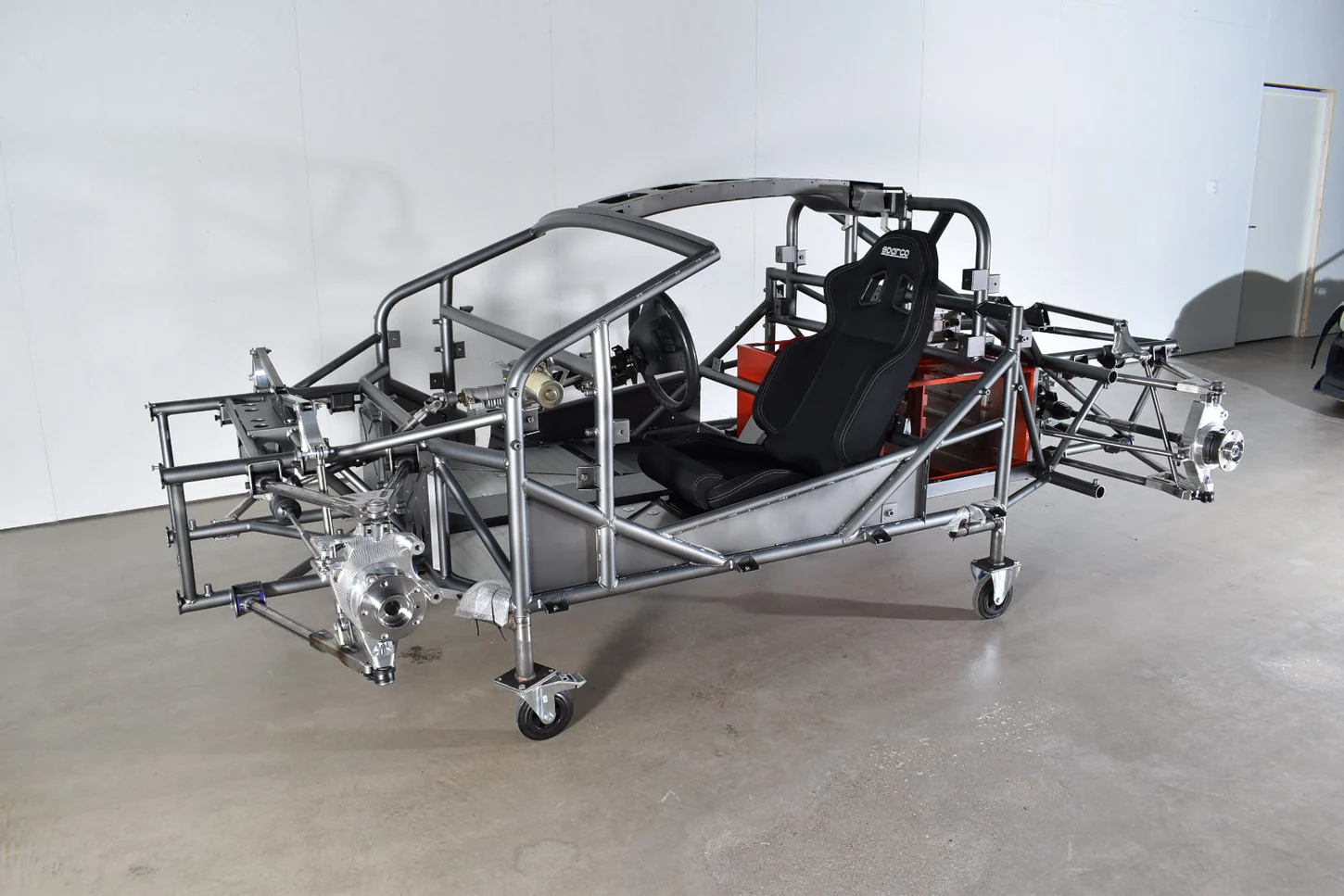
Making the shapes for the carbon-fibre bodywork called for moulds. Rather than leave the problem to someone else, the builder rented an industrial robot and learned enough motion control to have it cut large blocks of foam.
The photograph shows the result: orange shavings piled around the machine, across the floor and into the corners. Some curl like wood from a plane. The rest looks like a small snowfall that has badly misunderstood the season.
It's a tremendous mess. The sort of mess that tells you something useful has been happening.
DRAWINGS CAN BE PERSUADED.
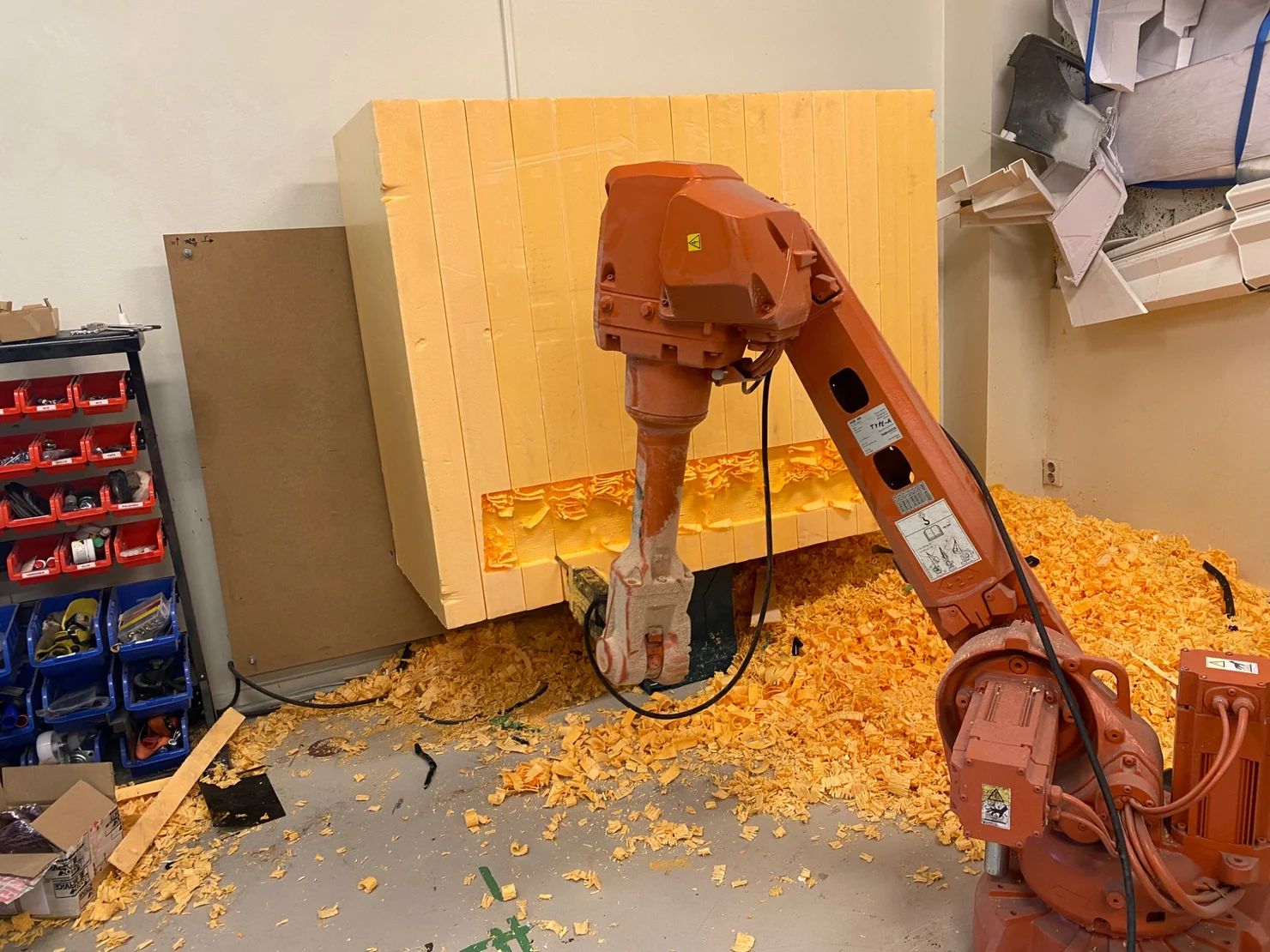
The windscreen frame was welded at the wrong height. Too low. Cutting it loose and doing the welding again would have been the straightforward correction, if not a particularly appealing one after all that work.
Instead, the builder scanned the chassis and changed the CAD model to match the steel. The revised shape carried through into the bodywork. The car ended up beautifully low, and the amount of room available for sitting upright became rather less beautiful.
It is possible to make a very accurate drawing of a mistake. In this case, the drawing helped make the finished car.
NEARLY READY ISN'T READY.
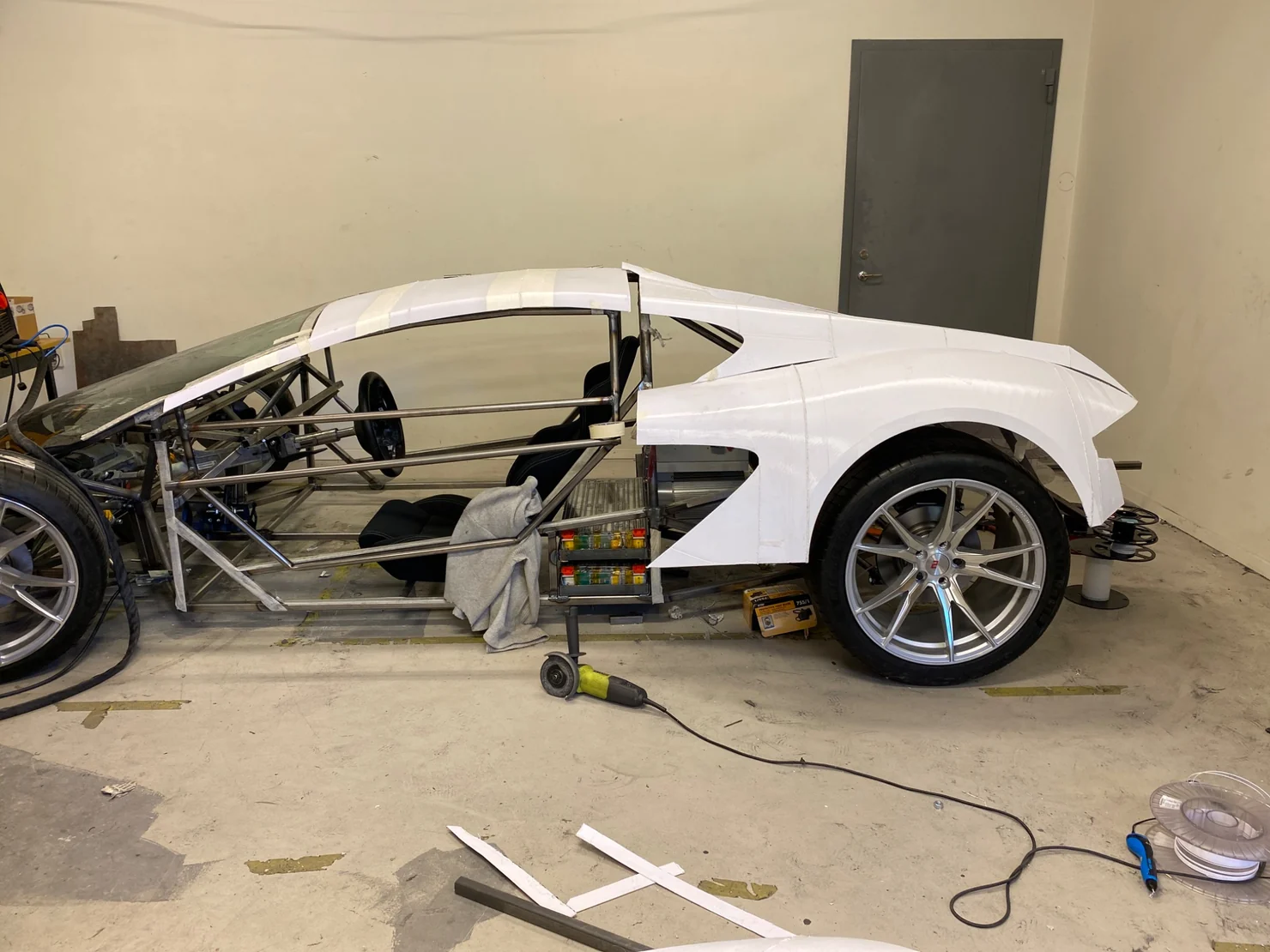
There were other lessons. At one point the steering rack was fitted on the wrong side, so a turn of the wheel produced the opposite response at the front wheels. That was discovered and had to be put right.
Later, during an eager test at new premises, steering push arms broke. They had only been tack-welded, something the builder says he had forgotten in the excitement of finally driving. The car was heading towards a wall at the time.
We won't invent the remainder of that afternoon. What matters here is that the builder remembers it, and that building a machine involves days when enthusiasm gets to the workshop a little earlier than caution.
But there it is. A car, where seven years earlier there had been a plan to make one.