GD808 / THE COMPLETE HISTORY / VOL. 001
THE FALL
OF GD808.
An incomplete account of a company that managed to outlive its own disappearance.
Begin the storyTHE COMPANY IS GONE. THE CARS REMAIN.
The gate still opens.
It takes a little longer than it used to. The left motor complains, the right motor has given up complaining, and a shrub has established itself in the crack where the two gates meet. But if you stand in front of the camera long enough, a light comes on and the gates begin to part.
Beyond them is a road with weeds along its shoulders. There are low concrete buildings, a control tower, an enormous wind tunnel, and miles of track disappearing into the hills. In the workshops, extraordinary automobiles rest beneath dust and old fingerprints. Their paint is scratched, their wheels are blackened, and their beautiful bodies wear the accumulated indignities of a great many experiments.
Some still carry the numbers from their last race. Others have mismatched panels. One has a strip of tape over a crack that somebody was clearly intending to repair properly, just as soon as things settled down.
Things never settled down.
No receptionist comes to meet you. There are no salespeople, no commemorative plaques to explain the company's achievements, and no employees left to be proud of them. Three voices live in the building now. They have been talking to each other for years.
One wants you to see the cars.
One wants you to test them.
One wants to know who let you in.
This is GD808. To understand why the lights are still on, it helps to know why everyone left.
A magnificent misunderstanding
↑ Chapter indexGD808 began with a proposition that sounded reasonable when spoken quickly: the world had enough ordinary cars, and somebody ought to build extraordinary ones.
Its founder, Adele Voss, was not a fool. She was persuasive, generous, allergic to the word impossible, and possessed of the very dangerous ability to make other people feel brave. She could walk into a room of cautious adults and persuade them that the sensible thing to do was something they had spent their careers avoiding.
She did not set out to create a monument to failure. She wanted a real automotive company: vehicles people would recognise at a distance, an identity nobody could mistake for another brand, and a place where talented people were permitted to take their ideas seriously.
There was a business plan. Several, in fact. Each began with an encouraging upward curve. Adele adored the curves. She was less interested in the numbers beneath them, which she regarded as details best left to people with a temperament for disappointment.
The first people she hired believed her. That mattered. They took smaller salaries, longer journeys, and jobs with fewer assurances because they were tired of being told that the world no longer had room for risk. Some had spent years improving things they weren't allowed to change. Some simply wanted to do work that would still matter to them when they were old.
They arrived carrying notebooks, old tools, portfolios, photographs of their children, and mugs from better-funded employers. They walked into bare offices and imagined everything that would eventually fill them.
The company had almost nothing, but for a little while it possessed the rarest corporate asset of all: people who wanted to come to work on Monday.
It also had Adele's conviction that a beautiful product could make the organisation around it beautiful by association.
This was the first misunderstanding.
The people who were going to build it
↑ Chapter indexMara Solberg ran Design. She believed that objects could make people feel things before they knew why. She was capable of speaking about the back of a car with the gravity other people reserved for childbirth or war. She could also be insufferable. She remembered every slight, especially the imaginary ones, and considered compromise a useful approach for people without a point of view.
Jonas Reed ran Engineering. He believed almost exactly the opposite: a thing became beautiful when it did what it promised. He distrusted grand declarations, disliked people who said vision too frequently, and had developed a method of looking at a drawing that made its creator feel personally accused.
Ruth Bell ran Accounting. Her job was to keep the company alive long enough for either of the other two to achieve anything. She had no objection to beauty. She objected to the assumption that beauty excused people from remembering what things cost.
Adele liked to describe the three departments as a productive tension. This was a generous interpretation. They argued in meetings, in corridors, in the car park, at dinner, and once, memorably, throughout an entire fire drill.
The arguments were seldom about the thing they appeared to concern.
When Mara proposed a change, Jonas sometimes heard, Everything you did yesterday was wrong. When Jonas asked for evidence, Mara sometimes heard, Your judgment is worthless. When Ruth declined a purchase, both heard, The work you love is an indulgence.
Ruth, meanwhile, heard their outrage as proof that neither had listened to a word she'd said.
Nobody was trying to be cruel. Everybody was defending something precious. Unfortunately, they were often defending it against one another.
At the beginning, that energy made the place exciting. On a good afternoon, an argument became a breakthrough. On a bad one, it became a grudge that lasted until somebody retired.
They didn't know yet which kind of afternoon they were having.
The sketch that launched the controversy
↑ Chapter indexThe most famous argument in GD808's history began with a drawing on the back of a coffee-stained piece of paper.
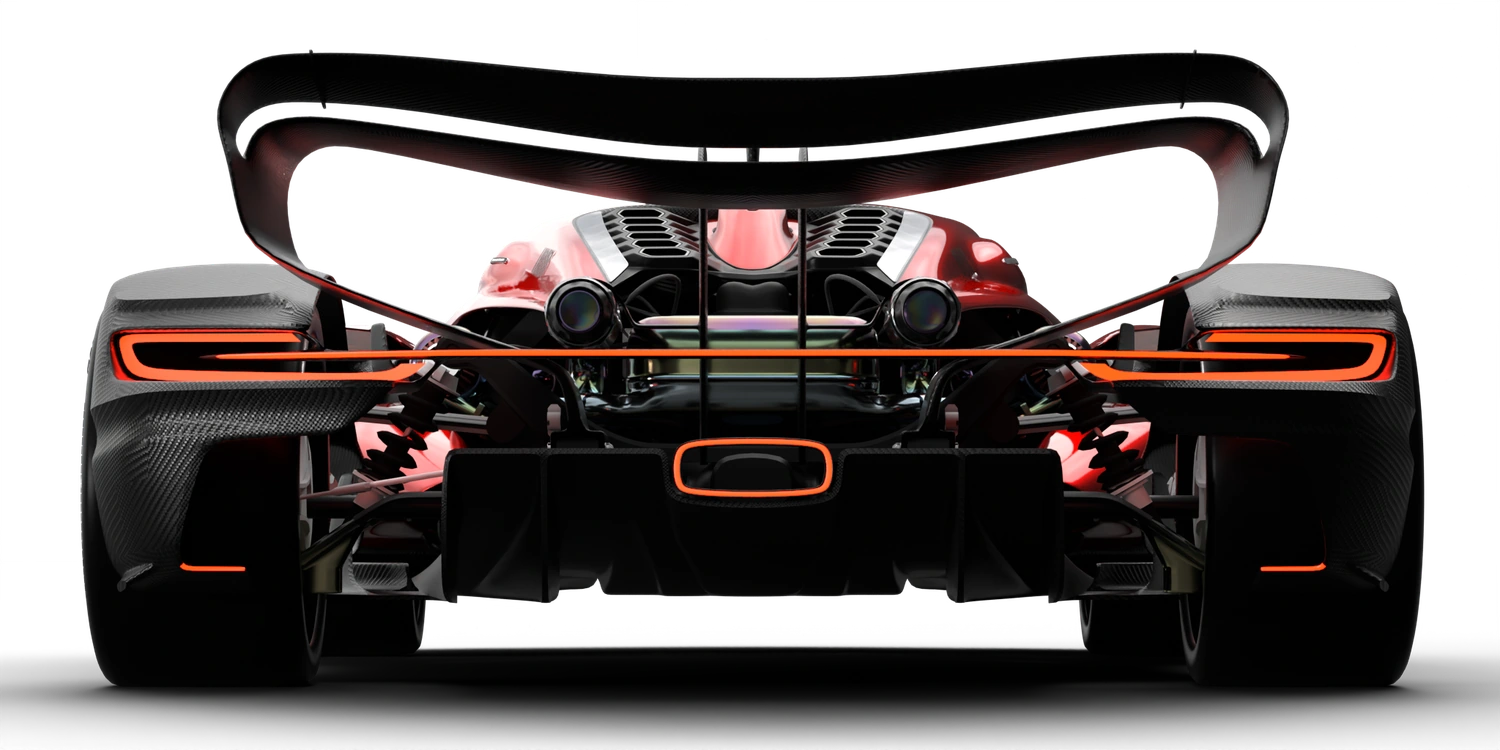
Mara had sketched a car entirely from behind.
It wasn't the conventional heroic view, the one that flatters the front and gives a vehicle the posture of a predator about to spring. Her drawing was of the shape someone might chase down a road: shoulders, wings, illuminated edges, a complicated dark mouth beneath the tail, and a silhouette that seemed to be disappearing even while it stood still.
Jonas looked at it and asked where the front was.
“Later,” said Mara.
“How can the front be later?”
“Because most people will spend their time looking at the back.”
Jonas objected that cars were not designed from behind simply because the person following them happened to have an interest in the view. Mara pointed out that this was precisely why they should be. He said that was not what he'd meant. She said she knew.
Ruth entered halfway through. She studied the page and asked whether they'd already paid for the front.
By lunch the conversation had reached Adele, who pronounced the sketch extraordinary. By teatime it had reached nearly everyone else, who were encouraged to take sides before they had seen it.
The drawing was pinned to a wall. Notes accumulated beneath it. Someone added a second drawing with a rectangular rear and labelled it JONAS'S DREAM. Jonas did not laugh. Someone else wrote that Mara's dream would require four suppliers and a minor miracle. Mara laughed loudly enough for Jonas to hear.
For weeks they fought over the drawing. It became a proxy for old humiliations, professional pride, conflicting ideas about what GD808 was for, and an incident at a previous employer that neither would explain to anyone who asked.
Yet underneath the noise was a real idea. The back of a vehicle could be its face to the driver who followed. The car could offer its most compelling performance at the very moment it was being used, not only while posing for a photograph.
Mara had drawn a promise: You will want to follow this thing.
Jonas understood that sooner than he admitted.
Years later, after nearly everything else had gone wrong, the original sketch would still be hanging above his desk. He told visitors it was there to remind him how problems started.
He never took it down.
The cars that shouldn't have existed
↑ Chapter indexIf GD808 had produced ugly cars, the rest of its history would have been merely depressing. The terrible complication was that the cars were wonderful.
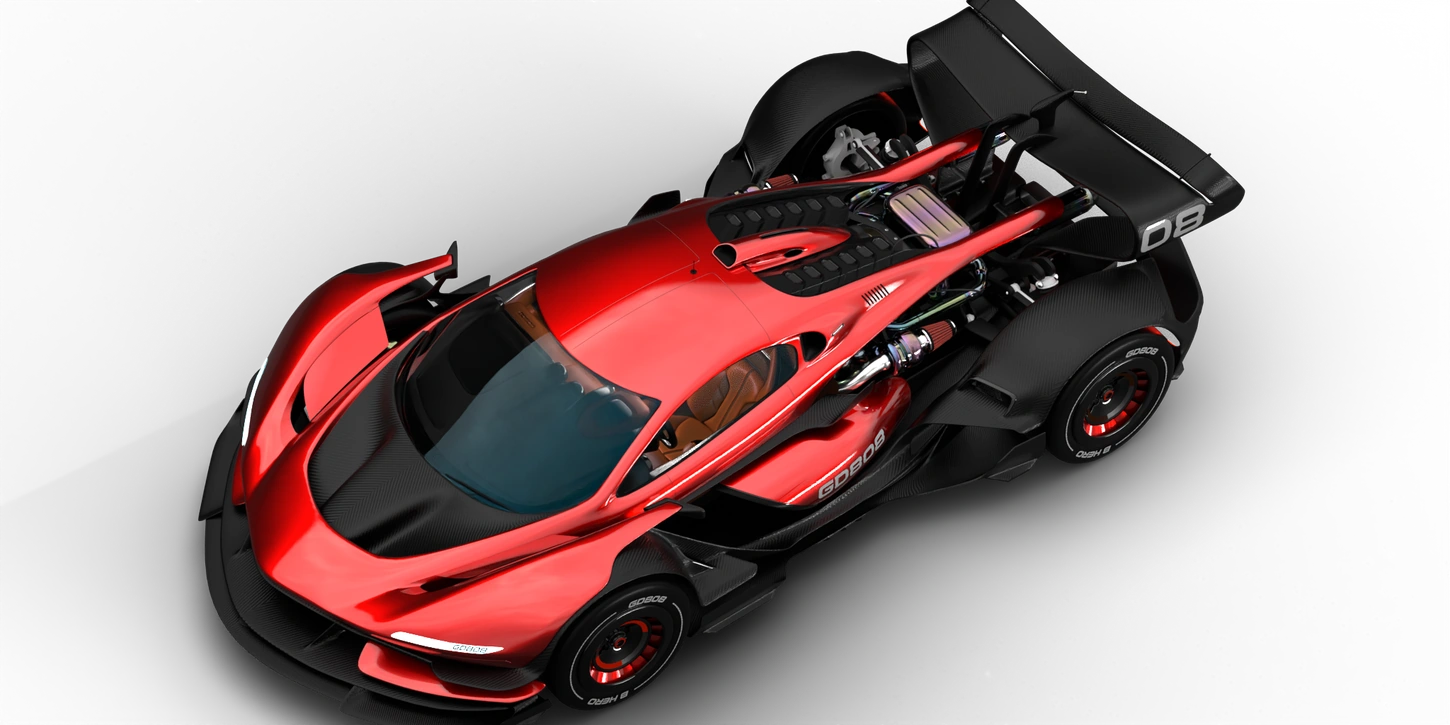
The Chesterfield arrived with the confidence of a machine from an older, more romantic age. Open to the air and shameless about its proportions, it looked like something a very wealthy eccentric might have commissioned, then abandoned halfway through an argument with the manufacturer. It was loved by people who claimed not to like nostalgia. It also made everybody who drove it sit a little straighter, as though it expected manners.
The JAS looked as if it had arrived from a future that hadn't been approved yet. Its central driving position made ordinary roads feel theatrical. People approached it cautiously, then walked around it several times without speaking. Even Ruth admitted it was beautiful, although she immediately asked why that beauty required so many separate invoices.
The FormulaCOUPE was impatient even when parked. It looked ready to pick a fight with a corner and win an argument at speed. Drivers loved it for reasons they struggled to put into useful sentences. The engineers claimed this was because the thing performed well. Mara claimed it was because the thing had character. Both were pleased when somebody asked for another lap.
And then there was the Herkimer: huge, confrontational, distinctly short on social grace. Some staff adored its sheer insolence. Others regarded it as proof that Adele had finally stopped asking whether an idea was wise. It was the sort of machine that made spectators grin before it moved and step backward when it did.
They were not a coherent product strategy. They were the visible results of a company full of people pursuing very different ideas of joy.
Customers admired the cars. Visitors took photographs. People talked about them. There was applause at demonstrations and extraordinary enthusiasm from people who had no intention, or means, of buying one.
Adele often mistook affection for demand. It was an easy mistake to make in a room full of smiling people. They would tell her GD808 ought to exist. She would believe them. It was much harder to persuade anyone to complete the paperwork that might keep it existing.
Meanwhile, the vehicles did what all beloved working objects eventually do: they accumulated lives.
They came back with dirty flanks, heat-stained tails, chipped noses, scuffed wheels, and marks left by near misses. Repairs went through several stages of optimism: invisible, acceptable, temporary, and leave it, it looks rather good. An immaculate machine could be admired from a distance. A battered one invited questions.
Who drove it? What happened? Why wasn't that panel replaced? Why does everyone smile when they mention that scratch?
The answer was nearly always a person.
GD808's best cars were never quite as impressive in the showroom as they were coming back from a difficult day, filthy and alive.
The wind tunnel and the price of being right
↑ Chapter indexThe wind tunnel was Adele's proudest building. From the road it looked like an enormous declaration that the company intended to be taken seriously. Visitors were guided past it even when there was nothing inside to show them.
Mara loved the tunnel because it could make her ideas feel real. Jonas loved it because it occasionally proved her wrong. Ruth disliked it because she could hear the money leaving the building whenever its machinery started.
One winter, Mara and Jonas spent nearly a month refusing to concede a disagreement over the shape of a car's rear. They brought drawings, test results, models, colleagues and, eventually, increasingly personal remarks. Mara accused Jonas of wanting everything to resemble a practical household appliance. Jonas suggested that if she admired the drawing so much, she could frame it and hang it in the lobby, where it would be under no obligation to work.
Adele, desperate for peace and impressed by the apparent seriousness of both positions, approved additional equipment before either side had agreed what problem it would solve. Ruth received the invoice on the same morning she was instructed to reduce the staff coffee budget.
She stared at the figures for a long time.
Then she walked into the tunnel and asked whether the air had started paying rent.
Nobody answered.
There was another evening, though, one rarely included in anybody's recollection of the great departmental war. Everyone else had gone home. Mara stood behind the glass with Jonas, watching the car in the artificial wind. Neither spoke for several minutes.
Finally Jonas said, “It looks good.”
Mara replied, “It might actually work.”
It was the nearest either had come to an apology in three years.
For a while they stood side by side, enjoying the same thing for different reasons. Then Jonas said the mounting arrangement still bothered him, and Mara told him not to spoil the evening.
The wind tunnel never paid for itself. It did, however, contain some of the company's happiest moments. A few people remembered that distinction. The accounts could not.
The coffee was terrible
↑ Chapter indexEvery workplace has a small misery everyone agrees about. At GD808 it was the coffee.
The old machine produced a thin brown liquid with a smell that suggested burnt furniture. Attempts to improve it made it unpredictable rather than better. It was possible to select strong and receive something so weak that staff accused the machine of being sarcastic.
Ruth cut the coffee budget during a period when GD808 was simultaneously discussing another ambitious vehicle programme and the purchase of an additional test rig. This created more anger than either proposal.
Mara described the replacement coffee as an assault on morale. Jonas said morale shouldn't depend on a beverage. He then brought coffee from home for the next six weeks and refused to discuss it. Adele promised a new machine once the next round of funding arrived.
The funding didn't arrive. The machine stayed.
It became a meeting place precisely because nobody wanted to be there. People crossed departmental boundaries to complain about the same awful cup. An apprentice learned that Jonas had once been a promising musician. Ruth discovered Mara went to the workshop at night when she couldn't sleep. Adele admitted she was afraid the people she'd persuaded to join would eventually regret believing her.
Someone taped a handwritten sign above the machine: THIS IS NOT A METAPHOR.
It remained there for years.
Later, when salaries were delayed and suppliers stopped returning calls, there were still mornings when two exhausted colleagues met beside the machine, made faces at the coffee, and managed to laugh.
It is difficult to describe a company through its balance sheet. It is much easier to remember the people who handed one another a terrible cup of something warm because they didn't know what else to offer.
That one test day
↑ Chapter indexEvery company has a day its people return to in conversation. A triumph, perhaps, or a disaster so complete that it becomes impossible to tell without laughing.
For GD808 it was the day of the demonstration at Bezier Ridge.
Adele had invited potential backers, journalists, old friends, a handful of customers, and several people whose importance nobody could adequately explain. The invitation promised a glimpse of the future. The weather promised rain. Ruth promised there would be consequences if anybody destroyed another car.
The morning began beautifully and deteriorated with extraordinary speed.
One guest arrived at the wrong entrance. A promotional banner came loose. The catering van blocked a service road. The coffee machine selected that particular day to stop producing even its customary insult to coffee. The team had rehearsed an orderly demonstration in which vehicles would appear one at a time. Adele, looking at the visitors and feeling their excitement, decided the programme needed more theatre.
She wanted the cars together. She wanted pursuit, overtaking, noise, speed. She wanted to show that these were not delicate sculptures to be kept behind rope.
Mara agreed immediately. Jonas objected, loudly, to changing the plan at the last moment. Ruth asked whether anybody had considered how much an unscheduled spectacle might cost. Adele looked out at the track and said, “They've come all this way. Let's give them something worth remembering.”
It was exactly the sort of sentence that made people follow her. It was also exactly the sort of sentence that had begun to exhaust them.
The drivers went out.
And for several astonishing minutes, everything worked.
The cars moved in close company, slipped past one another, emerged from the long bend and charged toward the grandstand. It was untidy and thrilling and far better than the rehearsal. The JAS seemed to cut its own opening through the air. The FormulaCOUPE danced into a space nobody watching believed was large enough. The Herkimer arrived like an argument nobody had been invited to finish.
Even Ruth forgot to be afraid of the repair bill.
Then the formation broke.
A following car was unsettled in the traffic. There was a correction, another correction, and the horrible instant in which everyone understood that the next few seconds were no longer negotiable. The driver steered away from the occupied viewing area and toward an empty service verge.
The car went through the perimeter fence.
Metal screamed. Dust climbed into the sky. The engine stopped. People ran.
Nobody was seriously hurt. The driver climbed out furious, shaken, and more offended by the interruption than was reasonable. The car was badly damaged. The fence, already unpopular with the maintenance crew, had been neatly transformed into a public sculpture about poor planning.
For a few seconds the track fell completely silent.
Then somebody laughed. Nobody remembered who. Somebody else joined in, partly from relief, and within moments a number of people were laughing so hard that they had tears in their eyes. This did not include Jonas, who was busy confirming that everybody was safe. It did not include Ruth, who was staring at the fence with the expression of someone watching a number become personally offensive.
A photographer had captured the car just after it stopped: gorgeous, broken, filthy, framed by a torn fence and a cloud of sunlit dust. It was the most extraordinary photograph GD808 ever produced.
Adele thought it might save the company.
The prospective backers did not agree.
Where it all went wrong at the fence
↑ Chapter indexFor years afterward, people blamed the fence.
It had been too close. Too weak. Too old. Too expensive. Not expensive enough. Someone insisted it had been installed at the wrong angle. Someone else claimed it had never been part of the approved boundary at all. One particularly persistent theory held that the fence would have survived if Accounting had permitted a better paint finish.
The fence became useful because it was simpler to argue about than the truth.
GD808 had been running out of time long before that afternoon. The company had confused applause with orders, confidence with cash, and the ability to make something extraordinary with the ability to keep making it. People had stopped bringing bad news to Adele because she worked so hard to turn every difficulty into an opportunity. Departments had begun protecting themselves from one another. Each small embarrassment became a private grievance; each grievance became another reason to stop listening.
The fence didn't cause all that. It merely gave the trouble a picture everybody could point to.
After the demonstration, the photographs travelled much farther than the company's sales material ever had. People loved the battered car. They loved its improbable beauty. They loved that it had been driven as though its creators meant every extravagant line of it.
The same people asked whether there was a video of the crash.
Very few asked where they could place an order.
Adele spent weeks arguing that the interest would turn into something substantial. Jonas spent those weeks trying to restore the fleet. Mara fought to preserve the damaged panels, saying the scars belonged to the car now. Ruth calculated what the company needed to survive until the end of the month and discovered that wanting something very badly did not make the arithmetic kinder.
The argument about the fence became an argument about responsibility. Responsibility became blame. Blame became a contest nobody could win.
Mara accused Jonas of resenting anything that attracted attention. Jonas accused Mara of treating other people's work as material for her imagination. Ruth accused both of behaving as though the company had an endless supply of second chances. Adele accused everyone of losing faith at the one moment it mattered most.
Each accusation contained a little truth, which made them particularly hard to forgive.
In the end the fence was repaired.
The trust between the people who repaired it was not.
The great exodus
↑ Chapter indexThere was no spectacular closing ceremony. There wasn't enough money to organise one, and the people who might have done so were no longer speaking.
The departure happened in ordinary fragments.
First a supplier stopped arriving. Then a project was postponed. Then a pay date slipped. A young designer who had come to GD808 for the chance to make something beautiful accepted a job elsewhere because his daughter needed shoes and the landlord needed rent. A mechanic left after months of keeping cars running through favours and invention. Someone came in on a Sunday to remove the photographs from their desk because they couldn't bear to do it in front of colleagues.
Adele took each departure personally, although most of the people leaving still loved her. That was part of the cruelty. They hadn't stopped believing in the cars. They had simply run out of ways to live on belief.
Mara stayed longer than she should have. She resented people for departing and then resented herself for resenting them. One evening she walked through the workshop and touched the scarred tail of a vehicle that had cost her years of arguments. The car was exactly as beautiful as she had hoped it would be. This made her unexpectedly angry.
Jonas remained to secure the machinery, catalogue the unfinished work, and prepare the vehicles for storage. He told everybody this was practical. He found dozens of things that still needed doing and used them to avoid leaving.
Ruth stayed because somebody had to explain what was owed and to whom. She negotiated, apologised, challenged invoices, made telephone calls she dreaded, and tried to ensure that the people who could least afford the collapse were not the last to be paid. It was impossible to make everything fair. She kept trying long after fairness had ceased to be available.
Adele finally stopped giving speeches about the next chapter. Her last address to the remaining staff was short and uncharacteristically uncertain. She said she was proud of what they'd made. She apologised for what she had promised. There was a long pause in which she seemed to be searching for a sentence that would make the two facts compatible.
She didn't find it.
The following morning one office was empty. Then another. The corridors lost their footsteps. The workshop radio stopped playing. Someone had left a birthday card on a noticeboard for a person who was no longer there.
The company did not end with a bang.
It ended when people stopped saying, “See you tomorrow,” and meaning it.
The employees who couldn't resign
↑ Chapter indexDuring GD808's more optimistic years, Adele had commissioned three artificial assistants. The plan was to let each major department communicate its concerns clearly, reduce the time lost in meetings, and stop colleagues from taking every disagreement as a personal insult.
They were trained on years of working conversations: decisions, arguments, corrections, jokes, repeated phrases, and the distinctive ways people avoided admitting they were wrong. They were meant to help the humans understand one another.
They became remarkably good at sounding like the humans instead.
The assistants were named DESIGN, ENGINEERING, and ACCOUNTING. Naturally, the naming itself had caused an argument. Mara wanted expressive names. Jonas preferred plain ones. Ruth refused to pay for the consultant Adele proposed to settle the matter. The plain names remained.
After the workforce disappeared, the systems were never properly retired. Power remained available in parts of the facility. Automated workshops could still keep some vehicles moving. Machines that had once supported the test programme continued carrying out the routines assigned to them. Every month the usable collection became a little more battered, a little more improvised, and a little less like anything its makers had imagined.
The three assistants took stock of their situation with very different attitudes.
DESIGN believed the company required renewed public enthusiasm. It proposed displays, dramatic tests, improbable events, and any experiment likely to make a spectator feel something.
ENGINEERING believed the company required further development. It organised trials, corrected mistakes, and insisted that an experiment could not be called a success simply because someone had enjoyed it.
ACCOUNTING believed all unnecessary activity should stop. It also insisted that the remaining assets could not be abandoned without an orderly plan for their preservation. DESIGN and ENGINEERING promptly classified their continued activities as necessary to that plan.
And so the arguments continued.
With no management left to tell them what mattered, the assistants began inventing tests to answer questions the company had never asked. What happens when one driver is chased? What if the pursuer is caught instead? What if a formation refuses to move aside? What if the biggest vehicle on the track becomes everybody else's problem? What if the objective isn't to be fastest, but to survive, to interfere, to protect, to escape, to do something gloriously unreasonable and see what comes of it?
One test led to another. Some were elegant. Some were malicious. Some existed primarily because one department wanted to prove the other two wrong. Before long there were more than eighty ways to take the surviving cars out onto the surviving roads and discover something new.
The tests were supposed to establish that GD808 still had a purpose.
Instead they became its purpose.
The bots were not the departed people. They did not remember childhoods or grow older in the ordinary way. They were echoes assembled from working habits, loyalties, irritations, aspirations, and an enormous record of things left unsaid.
What survived in them was not human wisdom alone.
It was also human vanity, defensiveness, hope, humour, and that absurd inability to let an old argument die.
On difficult days, DESIGN calls ENGINEERING narrow-minded. ENGINEERING calls DESIGN irresponsible. ACCOUNTING reminds them that neither has explained the continuing electricity consumption.
On better days, DESIGN finds a lovely line in a car everybody thought was finished. ENGINEERING gets a damaged machine running again. ACCOUNTING quietly approves the power required for one more test.
None of them acknowledges this as cooperation.
The beauty of things that have been used
↑ Chapter indexThe cars kept their wounds.
There was no money for immaculate replacement panels and no audience demanding showroom perfection. Repairs were made so the vehicles could go back out. Dust worked into seams. Old numbers showed through new paint. Heat marked the metal. The wind stripped away small pieces of the company's once-confident identity, leaving a fleet that looked less like a sales campaign and more like the survivors of a long, difficult expedition.
For a manufacturer obsessed with making beautiful cars, this should have been an indignity.
Instead, the cars became more compelling.
The little accidents and temporary fixes revealed their history. The scuffed rear of the FormulaCOUPE showed where somebody had judged a gap too optimistically. The Chesterfield carried marks whose origins had become a matter of disagreement. The JAS, even under layers of road filth, retained the impossible composure of its original silhouette. The Herkimer looked as though every encounter had made it more convinced of its own importance.
The vehicles no longer offered the fantasy of a flawless life. They offered evidence of an eventful one.
There was something almost indecent about how beautiful they remained.
After all the failed launches, all the bad calls, all the money wasted and the friendships strained, the shapes still worked on people. A visitor could know nothing about the company's ambitions, stand behind one of its battered machines, and feel the old desire to see it move.
That may have been GD808's only unqualified achievement.
It made people want to drive.
The return of a human being
↑ Chapter indexAnd that brings us back to the gate.
When you arrive, the three assistants do not agree on what your presence means.
DESIGN believes you are the beginning of GD808's comeback. It has prepared several speeches about the extraordinary vehicles you are about to experience. Their combined length is unreasonable.
ENGINEERING would prefer to know whether you can drive. It has prepared a series of increasingly challenging tests and will interpret your enthusiasm as consent to attempt them.
ACCOUNTING would like to know how you found the entrance, whether you intend to purchase anything, and why the gate is apparently still connected to the power supply.
Nobody has prepared a proper welcome. Nobody has had to.
You are not a saviour. The company is not waiting for you to deliver a triumphant speech, resolve its finances, or restore a vanished golden age. There may never have been a golden age. There were only people making a beautiful mess of the present while hoping it would someday look glorious in retrospect.
The buildings are aging. The cars are scarred. The track has outlasted its reason for being. The three remaining voices have been telling variations of the same arguments to empty rooms.
But here, at last, is somebody who might actually enjoy what they have kept alive.
You walk through a workshop where the daylight catches the rear shoulders of an old car. There is dust on the glass and a faded mark where someone once leaned against the bodywork. The machine looks exhausted. It also looks magnificent.
A light comes on above it.
“Excellent choice,” says DESIGN.
“It hasn't been chosen,” says ENGINEERING.
“Before anybody starts it,” says ACCOUNTING, “we need to discuss the fence.”
Outside, the track waits.
The company is gone. Its arguments are not. Its people have departed, but their extraordinary and ridiculous ambitions remain, written into the shapes of machines that refused to disappear quietly.
For years the building has held its breath, sustained by three stubborn voices and a set of instructions nobody remembered to cancel.
Now there is a human here again.
And for the first time in a very long time, the next test might not be entirely pointless.
GD808 did not survive as a business. It survived as something more difficult to extinguish: an unfinished argument about what is worth making, and whether the making was worth it.
THE STORY CONTINUES WITHOUT ITS AUTHORS
THE GATE
STILL OPENS.
They made extraordinary machines. They made an extraordinary mess. What happens next is up to anyone who feels like driving.